
PINEWOOD
Pine wood is a softwood sourced from coniferous trees in the Pinus genus. It’s one of the most widely used and affordable types of timber globally.
Pine Wood Description and Properties
| Characteristic | Description |
| Color | The sapwood is typically yellowish-white or light yellow, while the heartwood is a light brown that can develop a reddish hue and darken with age. |
| Grain & Texture | It generally has a straight grain and a medium, uniform texture, often featuring distinctive knots that contribute to its rustic aesthetic. |
| Weight & Density | Classified as a softwood, it’s relatively lightweight with a moderate density (around 350 to 700 kg/m³), making it easy to handle and transport. |
| Workability | Pine is very easy to work with using both hand and machine tools. It cuts, shapes, nails, screws, and glues well. It’s also highly adaptable to finishes, staining and painting well. |
| Durability | Pine has moderate natural durability and is prone to dents, scratches, and decay if exposed to moisture or insects. For outdoor use, it is often pressure-treated to enhance its resistance to rot and insects. |
| Sustainability | Pine trees grow relatively fast, making it a highly sustainable and cost-effective option compared to many hardwoods. |
Uses of Pine Wood
Pine wood’s versatility, affordability, and workability make it suitable for a wide range of applications:
- Construction and Structural: It is extensively used as construction lumber for framing houses, roofing, and general structural purposes. Southern yellow pine is particularly valued for its strength in these applications.
- Furniture: It’s a popular and inexpensive material for crafting indoor furniture (tables, chairs, bed frames, cabinets) due to its aesthetic grain and ability to accept various finishes. It is highly sought after for Scandinavian and rustic design styles.
- Interior Finishing: Pine is used for interior millwork, such as paneling, molding, window frames, and door frames.
- Outdoor Applications: When pressure-treated, it is ideal for decking, fencing, landscaping timbers, and outdoor furniture, as the treatment provides necessary resistance to moisture and insects.
- Byproducts: Pine wood pulp is a primary raw material in the paper and cardboard industry. The resin from pine trees is also processed into products like turpentine and rosin.
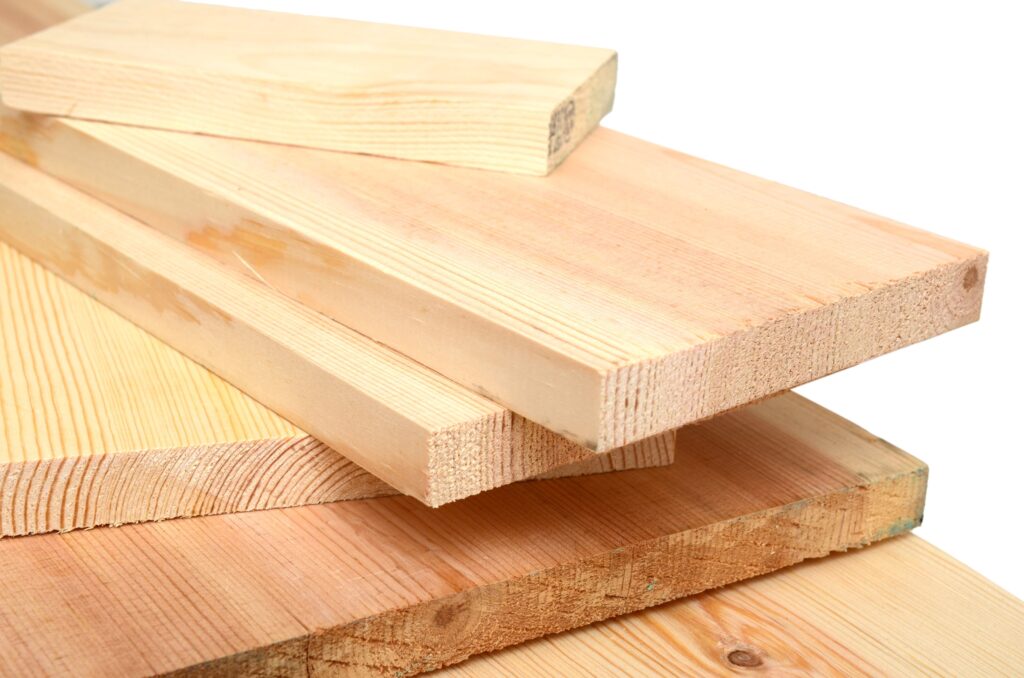
CEDAR WOOD
Cedar wood is a highly prized softwood known for its distinctive aroma, natural beauty, and inherent resistance to decay and insects. The most common varieties used in construction and woodworking are Western Red Cedar and Eastern Red Cedar.
Cedar Wood Description and Properties
| Characteristic | Description |
| Color & Appearance | It typically ranges from light pink to a rich reddish-brown (heartwood), which gradually weathers to a soft, distinguished silvery-gray patina if left untreated outdoors. It has an attractive, straight grain and a uniform texture. |
| Aroma | Cedar is famous for its spicy, resinous, and pleasant scent, which comes from natural oils (thujaplicins) in the wood. |
| Durability & Resistance | High natural resistance to rot, decay, and moisture. The aromatic oils act as a natural insect and moth repellent, making it exceptionally long-lasting, even in harsh outdoor environments. |
| Weight & Stability | It is generally lightweight and has excellent dimensional stability (low shrinkage factor), making it less likely to warp, cup, or twist than many other woods. |
| Workability | Cedar is soft, lightweight, and easy to cut, saw, and nail. Unlike pine, high-quality Western Red Cedar is pitch and resin-free, making it ideal for accepting a wide range of stains and finishes. |
| Insulation | Its low density and open cell structure give it superior insulation and acoustic properties, helping to dampen noise and maintain internal temperatures. |
Cedar wood is a highly prized softwood known for its distinctive aroma, natural beauty, and inherent resistance to decay and insects. The most common varieties used in construction and woodworking are Western Red Cedar and Eastern Red Cedar.
Cedar Wood Description and Properties
| Characteristic | Description |
| Color & Appearance | It typically ranges from light pink to a rich reddish-brown (heartwood), which gradually weathers to a soft, distinguished silvery-gray patina if left untreated outdoors. It has an attractive, straight grain and a uniform texture. |
| Aroma | Cedar is famous for its spicy, resinous, and pleasant scent, which comes from natural oils (thujaplicins) in the wood. |
| Durability & Resistance | High natural resistance to rot, decay, and moisture. The aromatic oils act as a natural insect and moth repellent, making it exceptionally long-lasting, even in harsh outdoor environments. |
| Weight & Stability | It is generally lightweight and has excellent dimensional stability (low shrinkage factor), making it less likely to warp, cup, or twist than many other woods. |
| Workability | Cedar is soft, lightweight, and easy to cut, saw, and nail. Unlike pine, high-quality Western Red Cedar is pitch and resin-free, making it ideal for accepting a wide range of stains and finishes. |
| Insulation | Its low density and open cell structure give it superior insulation and acoustic properties, helping to dampen noise and maintain internal temperatures. |
Uses of Cedar Wood
Cedar wood’s unique combination of resistance and aesthetics makes it a premier choice for both indoor and outdoor projects:
- Outdoor Construction: Its natural resistance to the elements makes it an excellent material for exterior applications:
- Siding and Cladding
- Roofing Shingles and Shakes
- Decking, Fences, and Posts
- Outdoor Furniture, Pergolas, and Gazebos
- Interior Applications:
- Wardrobes, Chests, and Linen Closets: The strong, pleasant scent and natural repellent properties protect clothing from moths and insects.
- Interior Paneling and Trim
- Saunas and Hot Tubs: Western Red Cedar is the preferred wood due to its aroma, moisture resistance, and lack of resin.
- Specialty Uses:
- Musical Instruments: Used for soundboards in guitars for its tonal quality and resonance.
- Boat Building
- Crafts and Carving
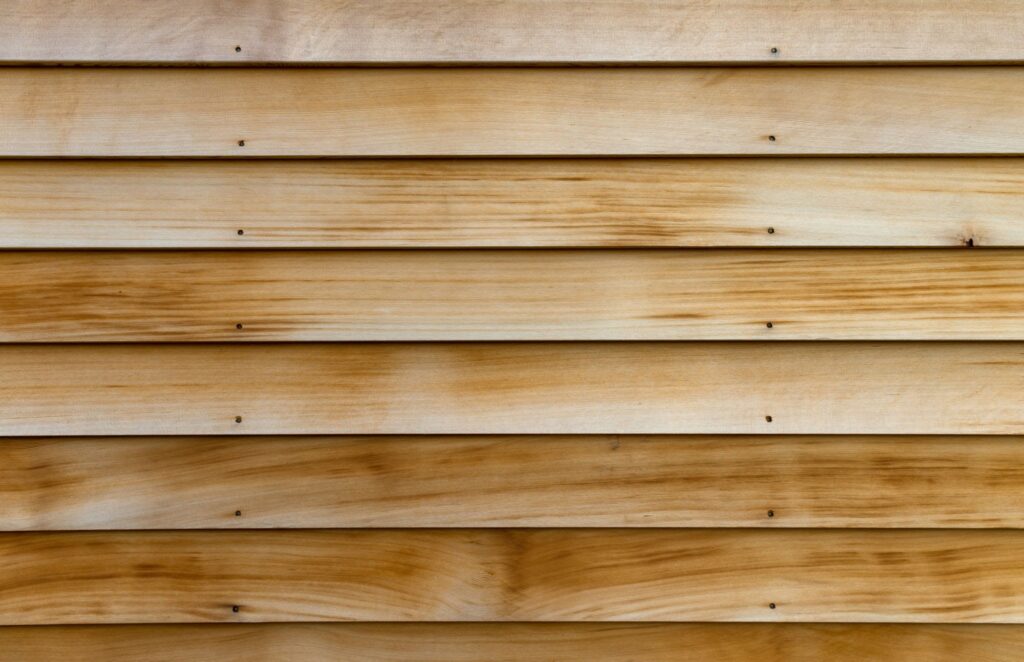
TEAK WOOD
Teak is a premier hardwood famous for its extreme durability and aesthetic appeal, often called the “King of Woods.” It is sourced from the Tectona grandis tree, native to South and Southeast Asia.
Teak Wood Description and Properties
| Characteristic | Description |
| Color & Appearance | Golden-brown color that darkens with age. The sapwood is pale yellowish. It has a straight grain and a coarse, uneven texture. |
| Durability & Resistance | Exceptional durability. It contains high levels of natural oils and rubber, which act as built-in weatherproofing. This makes it virtually impervious to rot, decay, fungi, termites, and other pests, even without treatment. |
| Water Resistance | Its oil content makes it highly resistant to moisture, warping, cracking, and splitting, which is why it’s a top choice for marine applications. |
| Hardness | It is a dense, strong hardwood (Janka hardness of 1,000–1,155 lbf), which contributes to its long lifespan and ability to handle heavy traffic. |
| Aging | When left untreated and exposed to the elements, teak will naturally weather to an attractive, silvery-gray patina without losing its strength. |
| Workability | Although dense, it is relatively easy to work with and finish. However, its high silica content can cause blunting on sharp tools. |
Uses of Teak Wood
Teak’s unparalleled resistance to the elements makes it the ultimate material for applications requiring maximum longevity, particularly in marine and outdoor settings:
- Marine Applications: Teak has been used in shipbuilding for over 2,000 years. It is the gold standard for boat decks, railings, marine trim, and cabinetry due to its resistance to saltwater corrosion and UV rays.
- Outdoor Furniture & Decking: It is widely considered the best wood for luxury outdoor furniture, patio sets, and residential decking because it can be left outdoors year-round without deteriorating.
- High-End Construction: Used for durable flooring, countertops, window frames, doors, and architectural millwork where stability and resistance to moisture are critical (e.g., bathrooms and kitchens).
- Fine Interior Furniture: Crafted into high-quality indoor furniture and cabinetry prized for its elegance and ability to become a long-lasting heirloom.
ROSE WOOD (SHEESHAM)
Rosewood refers to several types of richly hued, dense hardwoods primarily from the Dalbergia genus. It is highly valued globally for its striking appearance, sweet fragrance, and exceptional acoustic properties.
Rosewood Description and Properties
| Characteristic | Description |
| Color & Appearance | Varies widely, typically ranging from deep reddish-brown to purplish hues, richly streaked and variegated with darker, often black, veining. The wood takes an exceptionally high polish. |
| Aroma | Emits a strong, sweet, rose-like fragrance when freshly cut or sanded, which can persist in the wood for many years, giving the wood its name. |
| Density & Durability | It is hard, tough, strong, and exceptionally dense (making it heavy). Rosewood is highly durable and naturally resistant to decay and insects. |
| Texture & Grain | Fine to medium texture with an oily or waxy feel. The grain can be straight, interlocked, or wavy. |
| Workability | Despite its hardness, rosewood is generally easy to work with and finishes beautifully, which is why it is favored for detailed carvings and turning. |
| Acoustic Properties | Possesses superior acoustic qualities, making it ideal for the manufacture of high-end musical instruments. |
Uses of Rosewood
Rosewood’s combination of beauty, strength, and resonance makes it a luxurious choice for specialized applications:
- Musical Instruments: This is one of its most famous uses. It is prized for parts of instruments where acoustic quality is paramount, such as:
- Guitar backs and sides
- Fretboards (fingerboards) on guitars and other stringed instruments
- Marimba and xylophone keys
- Woodwind instruments (like clarinets and recorders)
- Luxury Furniture & Cabinetry: Used in high-end, bespoke cabinets, tables, and decorative veneers due to its rich color and ability to hold a fine polish.
- Decorative Items & Turnery: Ideal for intricate carvings, inlays, handles, billiard cues, luxury flooring, and small turned objects like fountain pens and chess pieces.
MANGO WOOD
Mango wood is a popular, sustainable hardwood harvested from the Mangifera indica tree, primarily after the tree has aged out of its fruit-bearing years (typically 10 to 20 years). This makes it an eco-friendly and readily available timber source.
Mango Wood Description and Properties
| Characteristic | Description |
| Sustainability | Highly eco-friendly as it is a byproduct of the thriving global mango fruit industry, preventing trees from being wasted or burned. |
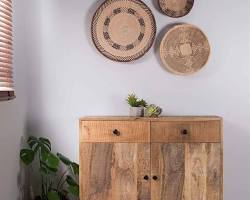
| Color & Appearance | Color ranges from light blonde or golden-brown to darker brown, often featuring striking, unique streaks of yellow, pink, green, or black. |
| Grain Pattern | Typically straight, but can be interlocked or wavy. The most sought-after feature is spalting, a natural discoloration caused by fungi, which creates marbled, dramatic patterns. |
| Hardness & Density | Classified as a moderate hardwood with a Janka hardness rating of about 1,070 lbf, making it comparable to hardwoods like ash and teak. It is strong and durable. |
| Workability | It is relatively soft for a hardwood, making it easy to cut, shape, and intricately carve, which appeals to artisans and furniture makers. |
| Water Resistance | It offers natural water resistance when properly finished, making it suitable for certain kitchen and furniture applications. |
Uses of Mango Wood
Mango wood is highly versatile, lending itself to both rustic and modern designs due to its unique and expressive grain:
- Furniture: A favorite material for all kinds of indoor furniture, including tables, chairs, cabinets, dressers, and beds. It is strong enough for heavy pieces while being easy to carve for detailed designs.
- Kitchenware & Home Decor: Its unique aesthetic and water resistance make it popular for small decorative items and kitchen accessories, such as bowls, cutting boards, serving trays, and turned objects.
- Flooring and Paneling: Used for flooring and wall paneling due to its density and durability.
- Musical Instruments: Occasionally used in the construction of some musical instruments, like ukuleles and certain parts of guitars.
WALNUT WOOD
Walnut wood, primarily from the American Black Walnut (Juglans nigra), is a highly prized hardwood known for its rich dark color, fine grain, and excellent working properties.
Walnut Wood Description and Properties
| Characteristic | Description |
| Color & Appearance | Features a distinct contrast between the creamy white sapwood (outer part) and the rich dark chocolate brown heartwood (inner part). The heartwood can also have hints of purple, gray, or reddish streaks. |
| Grain Pattern | Generally straight-grained, but often features beautiful waves, curls, or burls that add a decorative figure, especially in veneers and specialty cuts. |
| Hardness & Density | Classified as a medium-density hardwood, with a Janka hardness rating around 1,010 lbf. It is strong, tough, and has good dimensional stability, resisting warping and shrinking. |
| Workability | Works easily with both hand and machine tools. It takes a smooth finish, polishes exceptionally well, and holds paint and stain beautifully, though most prefer a clear coat or oil to highlight its natural color. |
| Durability | Naturally resistant to rot and is considered highly durable, ensuring furniture can last for generations. |
Uses of Walnut Wood
Walnut’s luxurious look and stability make it one of the most highly valued woods for fine craftsmanship and architectural applications:
- Fine Furniture & Cabinetry: The premier use for walnut is in high-end, bespoke tables, chairs, dressers, and cabinets. Its deep color and rich grain are synonymous with luxury.
- Architectural Millwork: Used for decorative and complex interior woodwork such as doors, paneling, stair handles, and custom molding.
- Veneer: Due to its high cost and striking figure, walnut is often sliced into decorative veneers to cover larger pieces of furniture and panels.
- Gun Stocks: It is a traditional and favored wood for crafting gunstocks and rifle components because of its shock resistance and ability to hold intricate carvings.
- Specialty Items: Used for smaller, high-quality items like carvings, turnery, novelties, and specific parts of musical instruments (like guitars).